
Guide
How attic insulation lifts your rating
Ceiling insulation is often the simplest fabric upgrade a BER can see, if the thickness can actually be measured.
Heat leaves a house through the roof as readily as through the walls. In DEAP, insulation at ceiling level on a cold roof is a standard fabric entry, and on many existing homes it is the first place a rating can improve.
What the survey needs
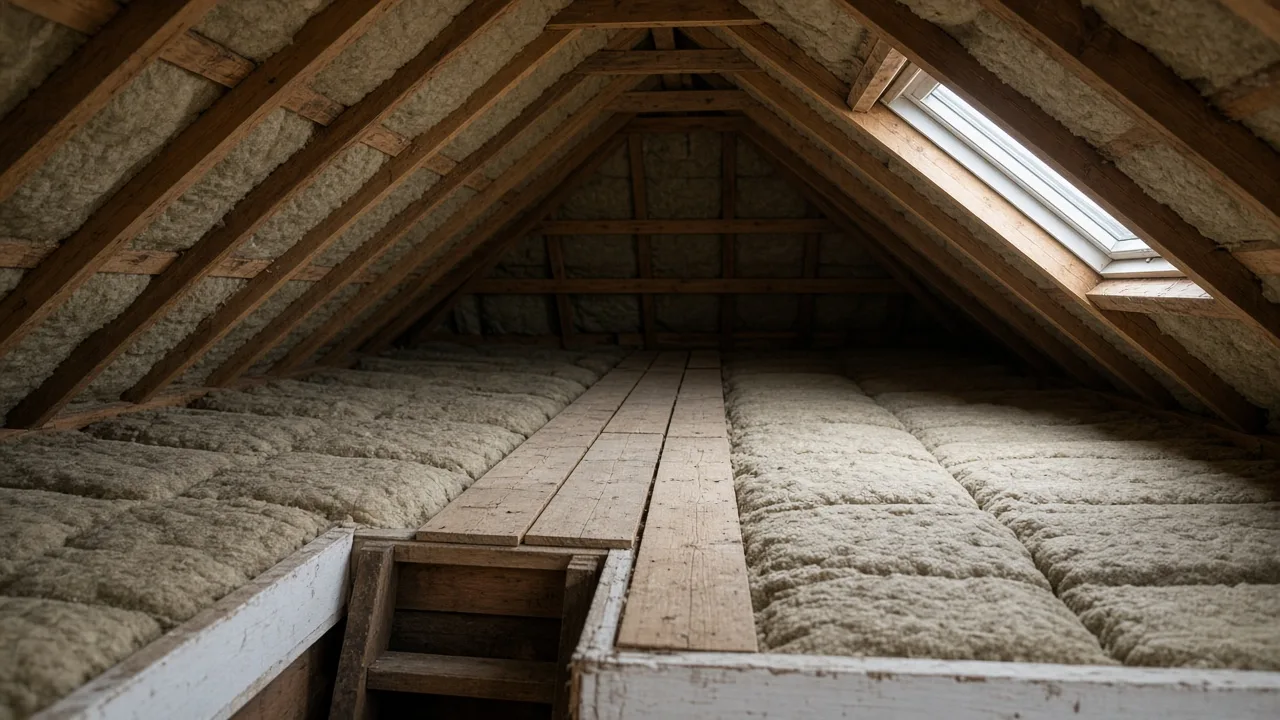
We measure the insulation that is there: product type where it is obvious (mineral wool quilt, rigid board, loose fill) and the thickness. Coverage matters. A deep quilt in the middle of the loft and bare joists at the eaves is not "the attic is insulated".
Boarding changes the picture. Storage boards laid tight on the joists squash the quilt. The compressed depth is what counts, not the thickness before the boards went down. A raised platform that leaves the quilt at full depth is different again. If you are about to board a loft for storage, it is worth knowing that before the next BER.
We also note whether the hatch itself is insulated and draught-sealed. A well-insulated ceiling with a leaky hatch still loses heat, and the hatch is part of the area.
What we will not invent
If the quilt is hidden and there is no label, invoice or photo from the installer, we cannot enter a thickness we did not see. Grant work that is already covered over needs the specification. That is the same rule as any other hidden insulation, and it is why the grant note asks you to keep the paperwork.
Ventilation of a cold roof still matters for the building, but it is a separate question from the BER number. We will not walk an unsafe loft. If the hatch is painted shut or there is no safe footing, tell us when you book and we will record the limit.
A thicker loft quilt will not, on its own, turn a G into an A. Heating, windows, walls and hot water all sit in the same calculation. The ratings guide shows the bands. When you want the certificate, send the Eircode.