
Guide
What's in your hot press matters
The cylinder, its jacket and the controls are part of the BER, not just a cupboard for towels.
In most Irish houses the hot press is a cupboard with the hot-water cylinder. DEAP, the SEAI method behind a BER, treats hot water as a real slice of the rating. What is in that cupboard changes the result.
What we record
On a typical visit we note:
- Whether hot water comes from the boiler, an immersion heater, a heat pump, solar thermal panels, or a mix
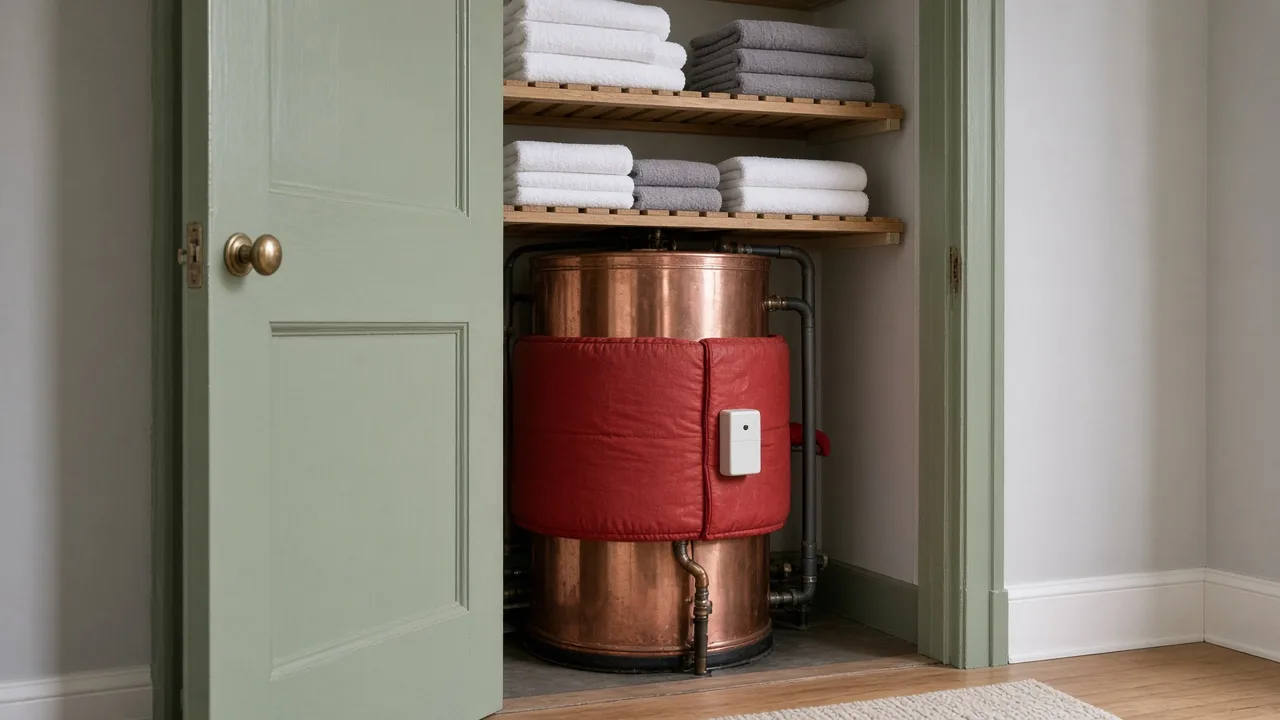
- The cylinder type and how well it is insulated. A factory-insulated cylinder and a bare copper cylinder with a loose red jacket are not the same entry
- Thermostat, timer and whether the immersion is on a clock or left to a switch
- Pipe insulation on the runs we can see
- The declared loss or the insulation thickness, where the label or specification is still readable
If the cylinder is hidden behind a panel we cannot open, say so before the visit. We record what we can evidence. We do not guess a modern cylinder into an older house.
Why it moves the rating
Stored hot water loses heat all day. A thin jacket, a cylinder in an unheated space, or an immersion that runs without a timer all push consumption up in the calculation. Replacing a boiler and leaving a tired cylinder is a common reason a heating upgrade moves the BER less than the householder expected.
None of this is a recommendation to buy a particular cylinder. If you are mid-grant, keep the product label and the installer sheet. Once the cupboard is closed up, the label is often the evidence. There is a wider note on grants and the BER, and the visit itself is covered in how to prepare.
Book a BER assessment when you want the certificate, and mention if the hot press is awkward to reach.